What Causes Water to Come Up Through Basement Floors After Heavy Rain?
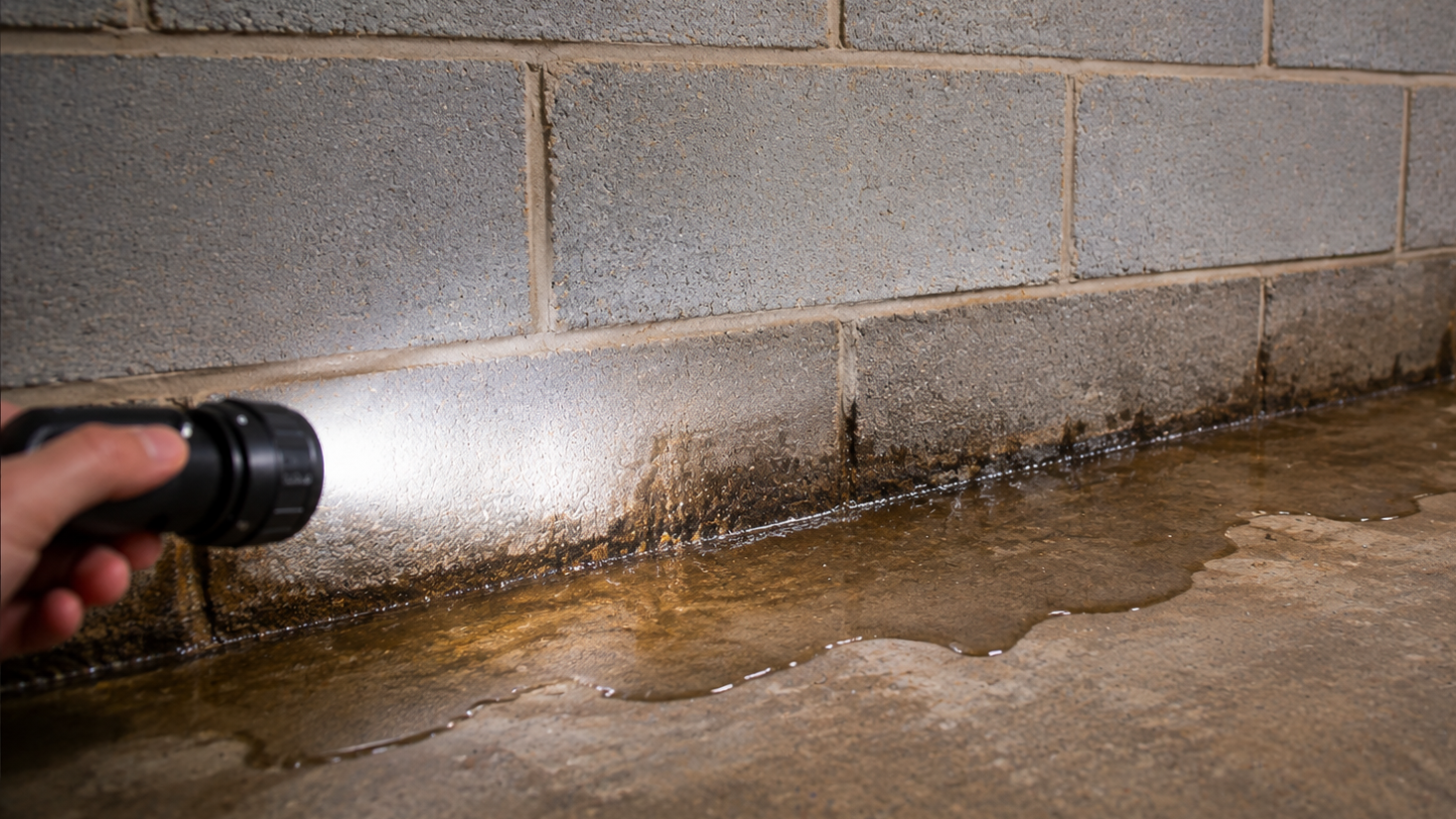
Water coming up through basement floor cracks or joints after heavy rain can be alarming. However, the place where water becomes visible is not necessarily where it originally entered. Water can travel through foundation walls, masonry block cells, or the joint where the wall meets the floor before appearing inside.
Identifying where the water first appears is important because an isolated foundation crack requires a different repair than hydrostatic pressure affecting a larger section of the basement.
Where Does Water Usually Enter a Basement?
The location where water becomes visible is not always its original entry point. Water may move through hollow concrete-block cells, follow a foundation crack, or travel beneath flooring before collecting in a low area.
- Water appearing along the wall-floor joint
- Dampness or staining near a foundation crack
- White mineral deposits on masonry walls
- Water emerging from a crack in the concrete slab
- A sump pump that cannot keep up or does not operate
- Water concentrated near plumbing or mechanical equipment
Common Ways Water Reaches a Basement Floor
Water Entering at the Wall-Floor Joint
One of the most common places to see water is the joint where the foundation wall meets the basement floor. During prolonged or heavy rain, water can build up in the soil beside and beneath the foundation. Concrete-block walls may also collect water inside their hollow cells. That water can eventually reach the slab edge and enter the basement at the wall-floor joint.
Why Water Comes Through Cracks in Basement Floors
A foundation-wall crack can provide a direct path for water, especially when the soil outside becomes saturated. Cracks in the floor slab can also become visible drainage points when water pressure develops beneath the basement. The crack’s location, width, movement, and surrounding moisture pattern should be evaluated before selecting a repair.
Plumbing Leaks and Other Interior Sources
Not every wet basement is caused by groundwater. Leaking supply lines, drainpipes, water heaters, HVAC equipment, or condensation can create similar symptoms. If water appears when it has not rained, an interior plumbing or mechanical source should be investigated.
Poor Exterior Drainage
Clogged gutters, short downspouts, settled soil, and improper grading can direct large amounts of roof and surface water toward the foundation. Correcting these conditions may reduce the water reaching the foundation, although exterior drainage improvements alone may not resolve pressure developing beneath the slab.
Why Heavy Rain Triggers Basement Water Problems in Metro Atlanta
Metro Atlanta storms can deliver substantial rainfall within a short period. When the soil surrounding a home becomes saturated, water may collect beside the foundation or beneath the basement slab. This increases pressure against foundation walls, cracks, and the wall-floor joint. A problem that remains hidden during dry weather may therefore become obvious during or shortly after heavy rain.
How to Narrow Down Where the Water Is Coming From
- Note where the water first appears—not simply where it eventually collects.
- Record whether it begins during the rain or several hours afterward.
- Photograph cracks, staining, mineral deposits, and damp areas.
- Check gutters, downspouts, and soil grading around the affected wall.
- Confirm whether the sump pump is operating and discharging properly.
- Consider plumbing or HVAC sources if water appears during dry weather.
- Keep electrical cords and equipment away from standing water.
The Correct Repair Depends on the Source
Basement waterproofing is not a one-size-fits-all repair. The appropriate solution depends on how the water enters, how much of the foundation is affected, and whether the problem involves drainage, cracking, plumbing, or structural movement.
Interior Below-Slab Drainage
When water repeatedly enters along a larger section of the wall-floor joint or pressure develops beneath the slab, an interior below-slab drainage system may be appropriate. The system collects water at the foundation perimeter and directs it to a sump basin before it reaches the basement interior.
Sump Pump and Discharge Improvements
A drainage system depends on a properly sized and functioning sump pump. The basin, pump, discharge route, check valve, and available backup protection should be evaluated as one system. Replacing a pump alone will not correct water that is not being collected effectively.
Foundation Crack Repair
An isolated, nonstructural foundation-wall crack may be addressed with a targeted crack-repair system. However, sealing the visible surface without understanding the crack and surrounding water conditions can allow leakage to return or appear elsewhere.
Exterior Drainage and Waterproofing Improvements
Depending on the source, improvements may include extending downspouts, correcting grading, repairing exterior drainage, or installing an exterior waterproofing system. These options should be selected based on site conditions rather than applied automatically to every wet basement.
What Not to Do When You Find Basement Water
- Do not assume waterproof paint will stop water pressure behind a wall or beneath the slab.
- Do not cover recurring moisture with flooring or finished walls before identifying the source.
- Do not seal every visible joint with caulk and assume the underlying drainage problem is resolved.
- Do not operate electrical equipment while standing in water.
- Do not ignore repeated leakage simply because the basement dries between storms.
When to Schedule a Professional Evaluation
A professional evaluation is appropriate when water returns after multiple storms, enters across a broad section of the basement, or appears alongside cracking, staining, musty odors, or visible foundation movement.
- Water repeatedly enters at the wall-floor joint.
- Cracks widen, move, or continue leaking.
- The sump pump runs constantly, fails, or cannot keep up.
- Finished walls or flooring may be concealing moisture.
- The source cannot be distinguished from a plumbing leak.
- Standing water creates an electrical or safety concern.
If you are dealing with water coming up through basement floor cracks or joints, The Waterproof Group can evaluate the source and recommend an appropriate repair. Learn more about our basement waterproofing services or schedule an inspection for your Metro Atlanta home.