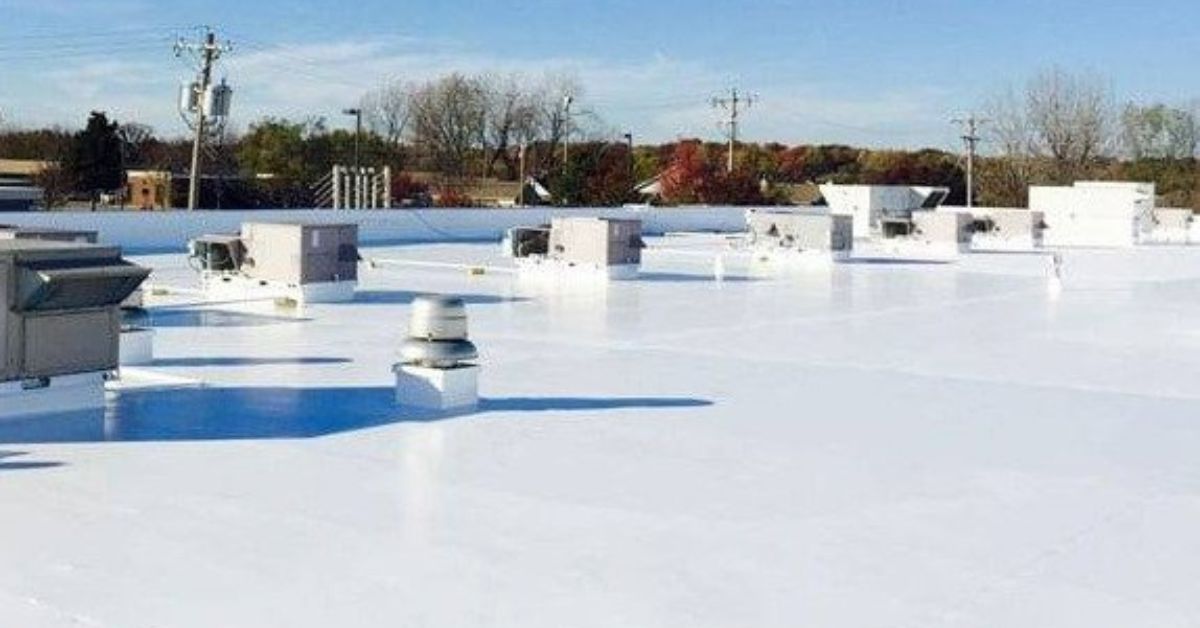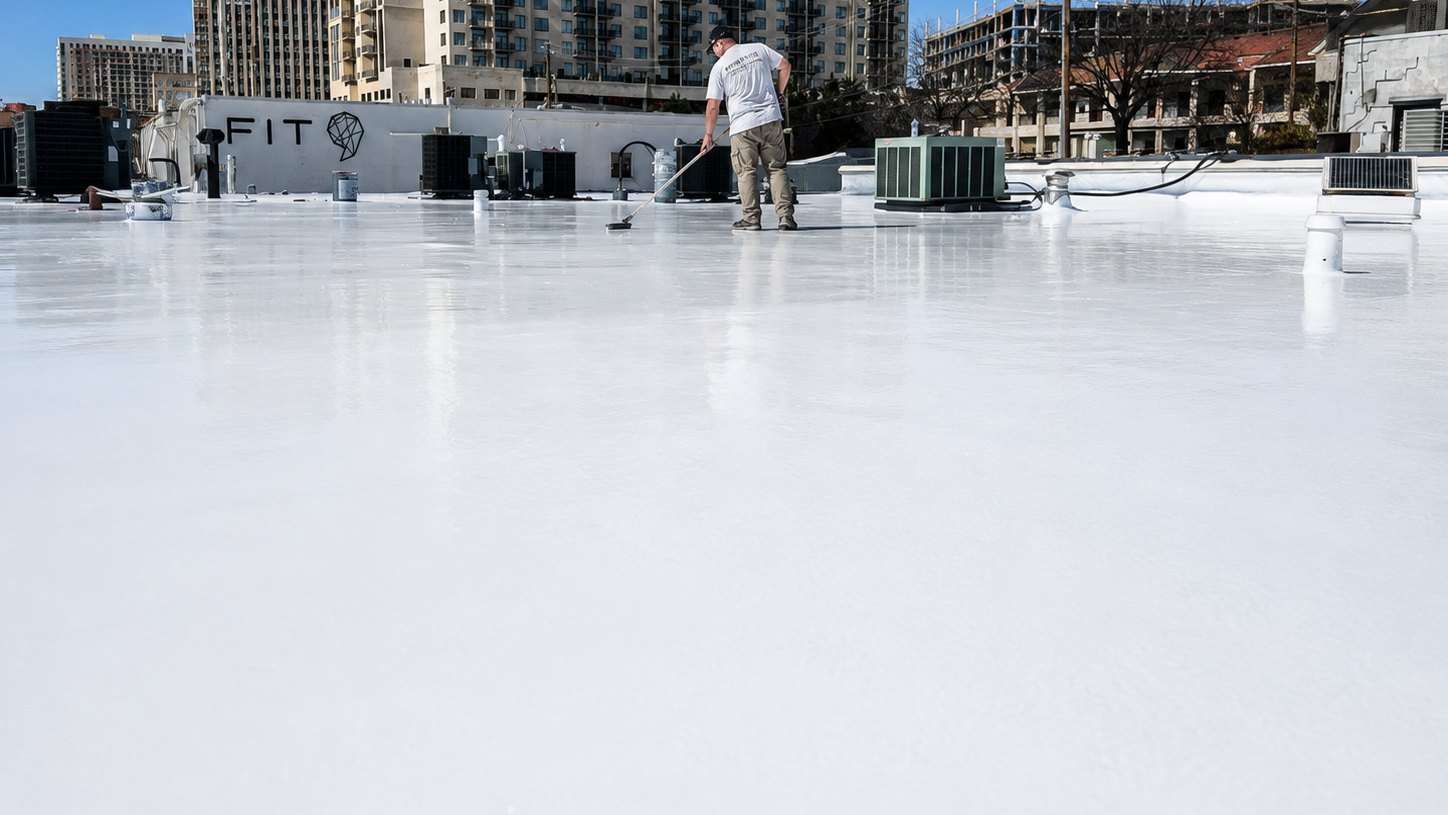
Silicone roof coatings have become an increasingly popular option for commercial building owners looking to extend the life of an existing roof without the expense and disruption of a complete roof replacement.
But here’s the catch: Not every commercial roof is a good candidate for silicone coating.
While silicone roof coating systems offer excellent UV resistance, waterproofing performance, and resistance to ponding water, their success depends heavily on the condition of the existing roofing system.
Before recommending a silicone roof restoration system, it’s important to evaluate the roof membrane, insulation, drainage, existing leaks, and overall structural condition.
At The Waterproof Group, we help commercial property owners throughout Metro Atlanta determine whether their existing roof can be restored or whether replacement is the more appropriate long-term solution.
What Are Silicone Roof Coatings?
Silicone roof coatings are fluid-applied roofing materials designed to form a continuous, weather-resistant protective membrane over an existing roofing system.
Once cured, the coating creates a flexible layer that helps protect the underlying roof from UV exposure, rainfall, and weather-related deterioration.
Unlike conventional roof replacement, a silicone roof restoration system may be installed directly over an existing compatible roof membrane, provided that the roof is structurally sound and properly prepared.
Silicone coatings are commonly used on commercial and industrial buildings with low-slope or flat roofing systems.
How Silicone Roof Coatings Work
A properly installed silicone coating system generally involves:
- Inspecting the existing roof for moisture intrusion, membrane deterioration, and damaged components.
- Cleaning the roof surface to remove dirt, debris, biological growth, and contaminants.
- Repairing damaged areas, seams, penetrations, flashing, and other vulnerable locations.
- Applying primers when required for adhesion or substrate compatibility.
- Installing the silicone coating at the manufacturer’s specified coverage rate and dry-film thickness.
The result is a protective membrane intended to help extend the useful life of a suitable existing roofing system.
What Types of Commercial Roofs Can Be Coated With Silicone?
One of the most important considerations when evaluating silicone roof coatings is compatibility with the existing roofing material.
Silicone coatings may be suitable for several commercial roofing substrates, but proper preparation and manufacturer-approved installation procedures are essential.
Metal Roofing Systems
Commercial metal roofs can develop leaks around fasteners, panel seams, penetrations, and flashing transitions.
Silicone coating systems may help restore suitable metal roofing assemblies by providing additional weather protection after necessary repairs and detailing.
Corrosion, loose fasteners, damaged panels, and movement-related problems must be addressed before coating installation.
Single-Ply Roofing Membranes
Certain existing TPO, EPDM, and PVC roofing systems may be candidates for silicone roof restoration.
However, adhesion requirements vary significantly between membrane types and manufacturers.
Surface preparation, compatible primers, and adhesion testing may be necessary before installation.
A coating should never be assumed compatible with a single-ply membrane without verifying the proposed system.
Modified Bitumen and Built-Up Roofing
Some modified bitumen and built-up roofing systems can be restored with silicone coatings when the existing assembly is in suitable condition.
These systems require careful evaluation for trapped moisture, deteriorated surfacing, membrane movement, and adhesion compatibility.
Spray Polyurethane Foam Roofing
Silicone coatings are also used as protective surfacing over suitable spray polyurethane foam roofing systems.
The coating helps protect the underlying foam from UV exposure and weathering.
Damaged or moisture-compromised foam must be repaired or replaced before recoating.
The important takeaway: Roof compatibility depends on more than the material alone. The condition of the existing roofing assembly is just as important.
What Are the Benefits of Silicone Roof Coatings?
When installed over a properly evaluated and prepared roofing system, silicone coatings can provide several advantages for commercial property owners.
1. Avoiding Unnecessary Roof Tear-Off
One of the largest potential advantages is the ability to restore an existing roof without completely removing the current roofing system.
Avoiding a full tear-off can reduce labor, disposal costs, construction debris, and disruption to building operations.
However, restoration is appropriate only when the existing roof meets the requirements of the proposed coating system.
2. Excellent UV and Weather Resistance
Silicone coatings offer strong resistance to ultraviolet exposure and weather-related deterioration.
This can help protect the existing roof membrane from continued environmental exposure.
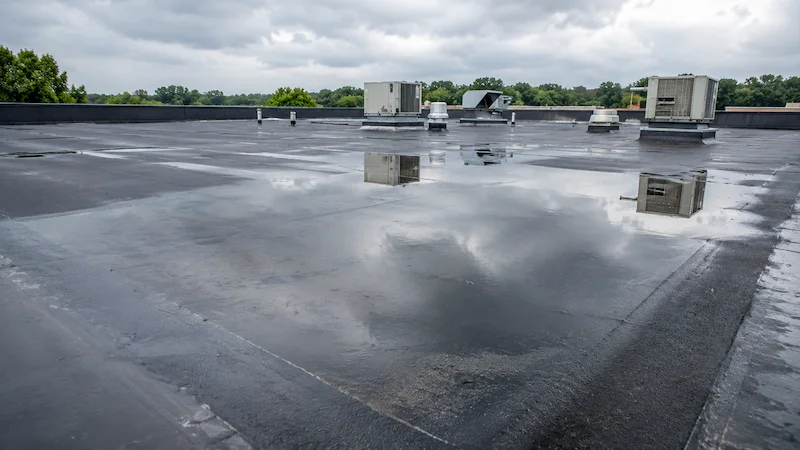
3. Resistance to Ponding Water
Unlike some other roof coating chemistries, certain silicone systems are specifically designed to tolerate prolonged exposure to standing water.
This can make silicone an attractive option for low-slope commercial roofs where drainage is less than ideal.
For example, GAF’s High Solids Silicone Roof Coating is formulated for commercial roof restoration applications, including resistance to ponding water under the manufacturer’s specified conditions.
However, ponding-water resistance does not eliminate the need to correct drainage problems or repair deteriorated roofing materials.
Manufacturer requirements and warranty exclusions must still be reviewed.
4. Reflective Roofing Options
White silicone roof coatings can provide high solar reflectance, potentially reducing roof surface temperatures and cooling loads.
As explained by the U.S. Department of Energy’s Cool Roofs guide, reflective roofing materials can help reduce heat absorption and cooling demand under appropriate building and climate conditions.
Actual energy savings depend on the building, insulation, climate, existing roof color, and HVAC operation.
5. Reduced Business Disruption
Commercial roof restoration often requires less demolition and material handling than a complete roof replacement.
For occupied commercial buildings, warehouses, retail properties, and other facilities, this may help reduce operational interruptions.
6. Potentially Extended Roof Service Life
A properly designed roof coating system can help extend the service life of an existing roofing assembly.
The additional service life depends on the condition of the roof, coating thickness, installation quality, maintenance, and manufacturer specifications.
When Is Silicone Roof Coating NOT the Right Solution?
Despite its advantages, silicone roof coating is not a universal solution for commercial roof problems.
There are situations where installing a coating could simply cover up an existing problem rather than correct it.
Saturated Roofing Insulation
If moisture has penetrated the roofing assembly and saturated the insulation, applying a coating over the surface will not remove that moisture.
Wet insulation and damaged roofing materials generally need to be addressed before restoration.
Extensive Membrane Deterioration
A roofing system with widespread membrane failure, severe deterioration, or significant damage may not be suitable for coating.
In these situations, replacement or more extensive repairs may be necessary.
Structural Problems
Roof coatings are not structural repair systems.
They cannot correct deteriorated roof decking, inadequate structural support, or excessive deflection.
Poor Surface Preparation
Even a high-quality silicone coating can fail prematurely when installed over dirty, contaminated, incompatible, or poorly prepared surfaces.
Adhesion failures, peeling, and premature deterioration can result from improper preparation.
Unresolved Roof Leaks
Applying silicone over an active roof leak without identifying the source is not a reliable repair strategy.
Roof penetrations, flashing, seams, drainage components, and other vulnerable locations should be inspected and repaired as needed.
When the source of water intrusion is uncertain, a professional commercial leak investigation can help identify underlying problems before restoration begins.
A roof coating should be part of a properly designed restoration system—not a shortcut around necessary repairs.
Silicone vs. Acrylic vs. Urethane Roof Coatings
Silicone is only one of several fluid-applied roofing technologies available for commercial roof restoration.
Different coating chemistries offer different advantages depending on the existing roof, environmental conditions, and performance requirements.
Silicone Roof Coatings
Silicone systems are known for UV resistance, flexibility, and the ability of certain formulations to withstand prolonged ponding water.
They are commonly considered for low-slope commercial roofs where moisture exposure is a significant concern.
Acrylic Roof Coatings
Acrylic coatings are typically water-based and can offer good reflectivity and weather protection.
However, many acrylic systems have restrictions involving prolonged ponding water, making drainage conditions an important consideration.
Urethane Roof Coatings
Urethane coatings can provide strong abrasion resistance, durability, and mechanical performance.
Depending on the formulation, they may be useful in applications where toughness and resistance to physical wear are important.
Asphaltic and Other Fluid-Applied Systems
Asphalt-based coatings and other specialized fluid-applied roofing materials may also be appropriate for particular substrates and restoration requirements.
Selecting the correct material requires evaluating the entire roof assembly rather than choosing a coating based solely on product claims.
For a broader look at available systems, visit our Commercial Roof Coatings and Restoration service page.
How Long Do Silicone Roof Coatings Last?
The expected service life of a silicone roof coating system depends on several factors, including:
- The condition of the existing roofing assembly
- Surface preparation and adhesion
- Coating thickness and application quality
- Climate and environmental exposure
- Roof drainage and maintenance
- Manufacturer requirements and warranty terms
Some commercial roof coating systems are offered with 10-, 15-, or 20-year warranty options, depending on the product, installation requirements, and project eligibility.
However, a manufacturer’s warranty term should not be confused with a guarantee of actual roof service life.
Regular inspections, drainage maintenance, and timely repairs remain important even after a roof has been restored.
How Much Do Silicone Roof Coatings Cost Compared to Roof Replacement?
Commercial roof coating costs vary depending on the size, condition, accessibility, and complexity of the existing roof.
Important cost factors include:
- Existing roof repairs
- Moisture investigation and damaged insulation replacement
- Surface cleaning and preparation
- Primer requirements
- Coating material and specified thickness
- Flashing, penetrations, and detail work
- Warranty and inspection requirements
When an existing roofing system is suitable for restoration, silicone coating may be considerably less expensive than a complete tear-off and replacement.
However, a heavily damaged roof requiring extensive repairs may not offer the same financial advantage.
The most economical option is not always the one with the lowest initial price.
Building owners should consider long-term performance, maintenance, future replacement costs, and the condition of the existing roofing system.
Why a Commercial Roof Inspection Should Come Before Choosing a Coating
Before recommending a silicone roof restoration system, the existing roof should be evaluated to determine whether coating is technically appropriate.
Depending on the project, an evaluation may include:
- Visual inspection of the roof membrane and flashing
- Identification of existing leaks and previous repairs
- Evaluation of drainage and ponding conditions
- Inspection of seams, penetrations, and transitions
- Moisture investigation where warranted
- Adhesion testing and manufacturer compatibility review
- Assessment of roof decking or structural concerns when indicated
This process helps identify whether the roof can be restored successfully or whether more extensive repairs or replacement should be considered.
Our commercial roofing services include roof repair, restoration, and coating solutions for qualifying commercial properties throughout Metro Atlanta.
At The Waterproof Group, we believe the right solution begins with understanding why a roof is leaking or deteriorating—not simply applying another product over the problem.
Frequently Asked Questions About Silicone Roof Coatings
Can silicone roof coatings stop commercial roof leaks?
Silicone coatings can help waterproof a suitable existing roofing system when installed as part of a properly designed restoration project. However, existing leaks, damaged flashing, deteriorated membranes, and moisture-compromised materials should be investigated and repaired before coating application.
Can silicone roof coatings be applied over an existing roof?
Yes, silicone coatings can be applied over certain existing commercial roofing systems, provided the substrate is compatible, structurally sound, and properly prepared. Adhesion testing, primers, and manufacturer approval may be required.
Are silicone roof coatings better than acrylic coatings?
Not necessarily. Silicone systems can offer advantages in prolonged ponding-water conditions, while acrylic coatings may be appropriate for roofs with suitable drainage and substrate conditions. The best choice depends on the roof assembly and project requirements.
Do silicone roof coatings work on flat roofs?
Yes. Silicone coatings are commonly used on suitable low-slope and flat commercial roofing systems. However, proper drainage, existing roof condition, substrate compatibility, and manufacturer specifications remain important.
Can a silicone-coated roof be recoated later?
Many silicone-coated roofs can potentially be recoated, provided the existing coating remains suitable and the new system meets the manufacturer’s preparation and compatibility requirements.
Does silicone roof coating eliminate the need for roof maintenance?
No. Coated roofs still require periodic inspections, debris removal, drainage maintenance, and repairs when necessary. Regular maintenance helps protect the investment and identify potential problems early.
Is silicone roof coating cheaper than replacing a commercial roof?
It can be, particularly when the existing roof is in suitable condition and does not require extensive repairs. However, costs vary by project, and a roof evaluation is necessary to determine whether restoration is a practical alternative.
Is Silicone Roof Coating Right for Your Commercial Building?
Silicone roof coatings can be an effective option for extending the service life of certain commercial roofing systems while reducing the expense, waste, and disruption associated with complete roof replacement.
But the decision should never be based on coating material alone.
The existing roof’s condition, moisture content, drainage, membrane compatibility, and repair requirements all play a role in determining whether a silicone restoration system is appropriate.
The Waterproof Group provides commercial roof leak investigations, roof repairs, and roof restoration services throughout Metro Atlanta and surrounding Georgia communities.
If you’re considering restoring an aging commercial roof, our team can help evaluate the existing conditions and discuss the available options.
Learn more about our Commercial Roof Coatings and Restoration Services or call (678) 223-4948 to schedule a commercial roof evaluation.
From the foundation to the roof — built waterproof.