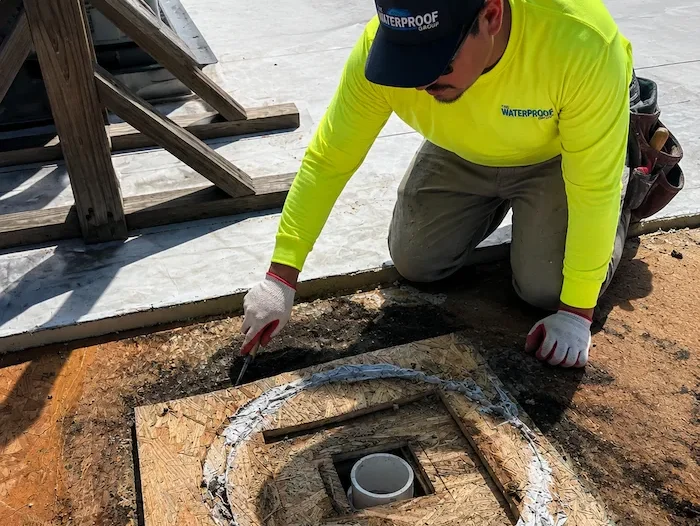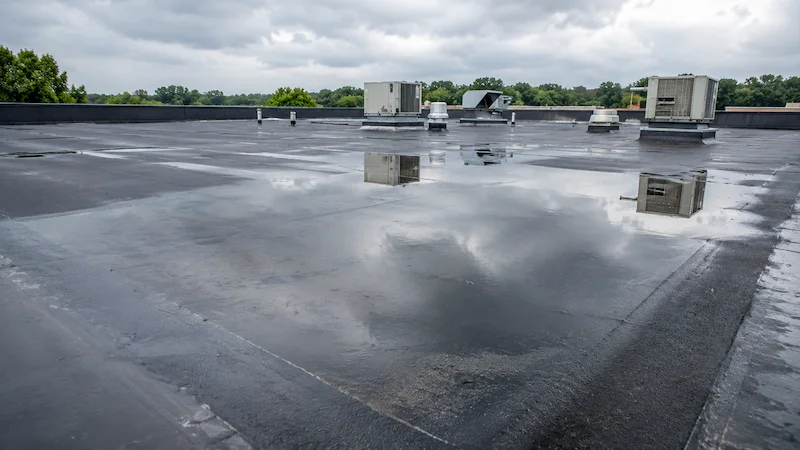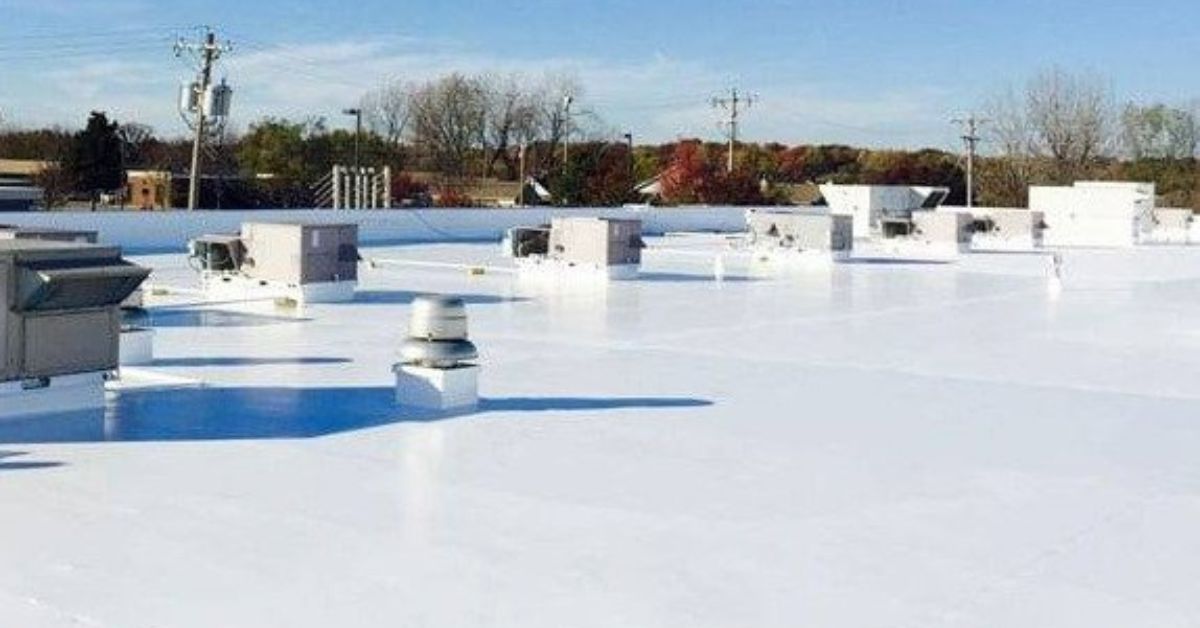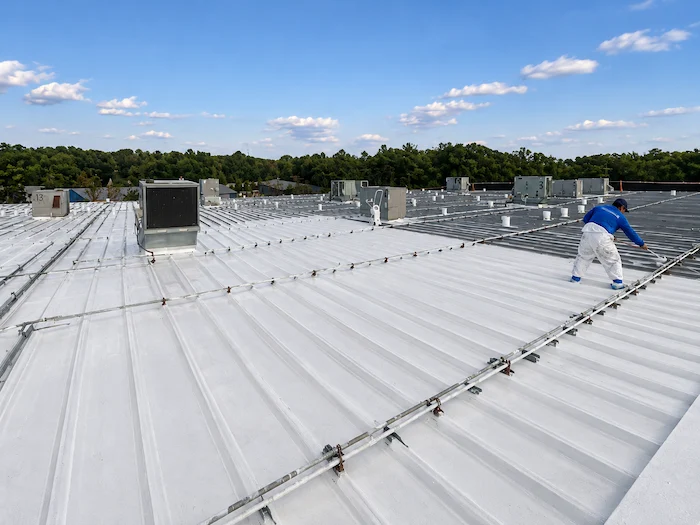
When a commercial roof begins showing signs of aging, recurring leaks, or deteriorating materials, property owners often assume a complete roof replacement is inevitable. But replacing an entire roofing system isn’t always necessary—or the most economical solution.
For commercial property owners and facility managers throughout Metro Atlanta, commercial roof restoration vs. replacement is an important decision that can affect maintenance budgets, business operations, and long-term building performance.
Depending on the condition of the existing roof, a properly designed restoration system may extend its useful service life without the expense and disruption of a complete tear-off. However, when moisture damage, structural deterioration, or widespread roofing failures are present, replacement may be the better investment.
At The Waterproof Group, we evaluate existing commercial roofing systems to determine whether targeted repairs, commercial roof restoration and coatings, or a more extensive roofing solution makes the most sense.
Understanding the differences can help you make a more informed decision before committing to a major roofing expense.
What Is Commercial Roof Restoration?
Commercial roof restoration is the process of repairing, preparing, and protecting an existing roofing system to extend its service life without completely removing and replacing the roof assembly.
Rather than tearing off the existing membrane, insulation, and other roofing components, restoration focuses on preserving serviceable materials and addressing areas that require repair.
How Fluid-Applied Roof Restoration Works
A typical fluid-applied roof restoration project may involve:
- Inspecting the existing roof membrane, insulation, drainage, and flashing.
- Identifying active leaks, trapped moisture, and deteriorated materials.
- Repairing damaged seams, penetrations, and flashing details.
- Replacing isolated wet or damaged roofing components where necessary.
- Cleaning and preparing the existing roof surface.
- Applying compatible primers, reinforcement materials, and fluid-applied waterproofing systems.
- Inspecting the completed installation for proper coverage and detailing.
When installed over a suitable existing roofing assembly, fluid-applied systems can create a continuous waterproofing membrane that protects vulnerable seams, transitions, and penetrations.
Restoration systems may use silicone, acrylic, urethane, asphaltic, or other specialized materials depending on the roof’s construction and performance requirements.
The key consideration is whether the existing roof is in suitable condition to support restoration.
When Is Commercial Roof Restoration the Better Option?
Not every aging commercial roof needs to be replaced. In many cases, the existing roofing assembly still has sufficient structural integrity to support a restoration system.
Several conditions may indicate that roof restoration deserves consideration.
1. The Existing Roof Is Structurally Sound
A roof that has experienced surface weathering but maintains a stable underlying assembly may be a good candidate for restoration.
For example, an aging metal roof may have deteriorating fastener seals, minor corrosion, or failing transition details without widespread structural damage.
Similarly, certain modified bitumen, built-up, and single-ply roofing systems may qualify for restoration when their existing materials remain sufficiently sound and compatible with the proposed coating.
However, the condition of the roofing assembly must be evaluated before determining whether restoration is appropriate.
2. Moisture Damage Is Limited and Repairable
One of the most important considerations is whether water has become trapped beneath the existing roofing membrane.
Wet insulation, deteriorated decking, or moisture-damaged substrates can compromise a restoration system if they are not properly addressed.
A professional commercial roof leak detection and repair evaluation can help identify problem areas before a restoration system is selected.
Depending on the roofing assembly, diagnostic methods may include infrared thermal imaging, moisture meters, and exploratory core cuts.
When moisture damage is isolated, affected materials may be removed and replaced before restoration proceeds.
When damage is widespread, more extensive replacement may be necessary.
3. The Roof Has Recurring Maintenance Issues but Remains Serviceable
An aging roof may experience repeated problems around seams, flashing, rooftop equipment, and penetrations.
These conditions do not automatically mean the entire roof needs replacement.
If the underlying assembly remains suitable, repairing vulnerable areas and installing a compatible restoration system may provide a more comprehensive solution than continuing with isolated patches.
The objective is to address the underlying causes of deterioration rather than repeatedly treating individual symptoms.
4. The Property Owner Wants to Minimize Business Disruption
Commercial roof replacement can involve significant demolition, material handling, disposal, equipment staging, and coordination with building occupants.
For occupied commercial properties, these activities may create logistical challenges.
Roof restoration can sometimes reduce the amount of demolition and material handling required, allowing work to proceed with less disruption.
This can be particularly valuable for warehouses, retail facilities, office buildings, industrial properties, and other occupied structures throughout Metro Atlanta.
When Is Commercial Roof Replacement Necessary?
Although restoration offers advantages, it is not appropriate for every roofing system.
There are situations where applying a coating would simply postpone a larger problem rather than provide a dependable long-term solution.
Widespread Saturated Insulation
When moisture has penetrated large portions of the roofing assembly, a surface coating cannot correct the damage beneath it.
Saturated insulation can lose thermal performance, contribute to material deterioration, and create conditions that undermine the effectiveness of a restoration system.
Extensive wet insulation may require removal and replacement of substantial portions of the roof assembly.
Deteriorated or Compromised Roof Decking
Structural deterioration is another major concern.
If the roof decking is severely corroded, rotted, weakened, or otherwise unable to support the intended roofing system, surface restoration alone is not an acceptable solution.
The damaged components must be evaluated and corrected before a new roofing system is installed.
Extensive Membrane Failure
Some roofing systems deteriorate beyond the point where practical repairs and restoration can provide reliable performance.
Examples may include widespread membrane separation, severe brittleness, extensive cracking, or substantial deterioration of the existing roof assembly.
In these situations, replacement may offer better long-term value than investing in a restoration system with limited remaining service life.
Serious Drainage Problems
Poor drainage can contribute to premature roofing failures.
Although certain coating systems offer resistance to intermittent or prolonged ponding water, they do not eliminate the need to evaluate drainage conditions.
Blocked drains, inadequate slopes, and persistent standing water should be addressed as part of the overall roofing strategy.
The bottom line: A roof coating should never be used to conceal underlying problems that require repair or replacement.
Commercial Roof Restoration vs. Replacement: Comparing Costs
Cost is often the deciding factor for commercial property owners, but the initial installation price should not be the only consideration.
A lower upfront expense does not automatically mean a better investment, especially if the roofing system requires substantial additional repairs in the near future.
Initial Installation Costs
Commercial roof restoration can often cost less than a complete replacement because much of the existing roofing assembly remains in place.
Potential savings may come from reduced demolition, disposal, replacement materials, and labor associated with removing the existing roof.
However, restoration costs vary considerably based on roof size, condition, surface preparation, repairs, coating selection, and required application thickness.
A roof requiring extensive moisture remediation or structural repairs may not offer the same financial advantages.
Long-Term Maintenance and Service Life
A properly selected restoration system can help extend the useful service life of an existing roof.
Actual performance depends on the existing roof condition, coating chemistry, installed thickness, workmanship, environmental exposure, and ongoing maintenance.
Property owners should also consider manufacturer warranty requirements and whether the proposed restoration system qualifies for an available warranty program.
Our commercial roof maintenance programs are designed to help property owners identify developing problems, maintain drainage, and protect their roofing investment.
Comparing the Total Cost of Ownership
When evaluating restoration versus replacement, consider:
- Initial project cost.
- Remaining condition of the existing roofing assembly.
- Expected service life of the proposed system.
- Ongoing maintenance requirements.
- Warranty terms and exclusions.
- Business disruption and operational impacts.
- Potential future repair or replacement expenses.
The best solution is not necessarily the one with the lowest initial price. It is the one that provides dependable performance and reasonable long-term value for the building.
Which Commercial Roofing Systems Can Be Restored?
The suitability of a restoration system depends on the existing roofing materials, condition, drainage, and compatibility with the proposed products.
Metal Roofing Systems
Metal roofs are frequently considered for fluid-applied restoration.
Common issues include exposed fasteners, deteriorated sealants, corrosion, and leaking panel transitions.
When the metal panels and supporting structure remain sound, properly designed restoration systems can address vulnerable details and provide an additional protective waterproofing layer.
Modified Bitumen and Built-Up Roofing
Modified bitumen and built-up roofing systems can experience weathering, surface deterioration, open seams, and localized membrane failures.
Certain fluid-applied systems may be suitable for restoration after the existing roofing assembly has been inspected, repaired, and properly prepared.
Compatibility testing and manufacturer-approved application procedures are essential.
TPO, EPDM, and Other Single-Ply Membranes
Some single-ply roofing membranes may be candidates for restoration, but not every coating is compatible with every membrane.
Surface condition, membrane formulation, adhesion requirements, and existing contamination can affect the suitability of a proposed coating system.
Adhesion testing and manufacturer-approved primers may be required before proceeding.
Spray Polyurethane Foam Roofing
Existing spray polyurethane foam roofing systems may also qualify for recoating or restoration when the foam remains in suitable condition.
Damaged or deteriorated areas must be repaired, and the selected coating must be compatible with the existing system.
For a closer look at one commonly used restoration material, read our article: Silicone Roof Coatings: When Are They the Right Choice for a Commercial Roof?
Silicone vs. Acrylic vs. Urethane Roof Coatings
Choosing the right roof coating involves more than selecting a product based on price.
Different coating technologies offer different performance characteristics, and the most appropriate system depends on the building’s specific conditions.
Silicone Roof Coatings
Silicone coatings are known for their UV resistance, weathering performance, and resistance to ponding water under conditions permitted by the product manufacturer.
They are frequently considered for low-slope commercial roofs where moisture exposure and sunlight are significant concerns.
However, silicone is not appropriate for every substrate or roofing condition.
Acrylic Roof Coatings
Acrylic coatings are commonly used in reflective roofing applications and can provide effective UV protection when installed over suitable substrates.
They generally require appropriate drainage conditions and may be less suitable for areas subject to prolonged ponding water, depending on the product.
Urethane Roof Coatings
Urethane coatings can provide durable protection in applications where abrasion resistance, flexibility, or mechanical performance are important considerations.
Some systems use multiple layers or different urethane formulations to achieve the desired performance.
Asphaltic and Other Specialized Systems
Asphaltic and other specialized fluid-applied materials may be appropriate for certain roofing assemblies and restoration applications.
Product selection should always be based on compatibility, environmental exposure, performance requirements, and manufacturer specifications.
There is no single roof coating that is best for every commercial building.
Can Reflective Roof Coatings Help Reduce Energy Costs?
Reflective roof coatings may offer an additional benefit beyond waterproofing protection.
Light-colored or specially formulated reflective surfaces can reduce the amount of solar radiation absorbed by a roof.
According to the U.S. Department of Energy’s guidance on cool roofs, reflective roofing materials can help reduce roof temperatures and cooling demand under appropriate conditions.
The actual energy benefit depends on factors such as insulation levels, building use, climate, roof construction, and existing surface reflectivity.
For commercial buildings in Metro Atlanta, reflective roofing may be worth considering as part of a broader roof restoration evaluation.
However, energy savings should not be assumed without considering the building’s specific characteristics.
Why a Commercial Roof Inspection Should Come Before Restoration or Replacement
One of the most expensive mistakes a commercial property owner can make is choosing a roofing solution before understanding the condition of the existing system.
A roof may appear severely deteriorated from the surface while still having a serviceable underlying assembly.
Conversely, a roof that looks relatively intact may conceal wet insulation, deteriorated decking, or hidden moisture damage.
A thorough inspection helps distinguish between these conditions.
What Should a Commercial Roof Evaluation Include?
Depending on the roof type and observed conditions, an evaluation may involve:
- Reviewing the existing roofing materials and assembly.
- Inspecting seams, flashings, penetrations, and rooftop equipment.
- Evaluating roof drainage and ponding conditions.
- Identifying active leaks and moisture intrusion.
- Using infrared or other moisture detection methods where appropriate.
- Performing exploratory core cuts when needed.
- Assessing membrane condition and coating compatibility.
- Determining whether targeted repairs, restoration, or replacement is appropriate.
Manufacturer guidance supports this approach. For example, GAF’s Liquid-Applied Roofing Manual emphasizes compatibility, adhesion testing, moisture evaluation, and repairing existing leaks before applying roof coatings.
A qualified evaluation helps property owners avoid investing in the wrong solution.
Commercial Roof Restoration Services in Metro Atlanta
The Waterproof Group works with commercial property owners, facility managers, general contractors, and building managers throughout Metro Atlanta to evaluate and protect existing roofing systems.
Based in Marietta, Georgia, our veteran-owned, family-operated company provides commercial waterproofing services focused on diagnosing moisture problems and delivering practical, long-term solutions.
Our commercial roofing services include:
- Commercial Roof Restoration and Coatings — Fluid-applied waterproofing systems designed to protect and restore qualifying existing roofing assemblies.
- Commercial Roof Leak Detection and Repair — Investigating roof leaks, identifying moisture intrusion, and addressing damaged roofing components.
- Commercial Roof Maintenance Programs — Preventative inspections, drainage maintenance, and ongoing roof care.
We evaluate roof conditions and recommend practical repair or restoration options when appropriate. If a roofing system has deteriorated beyond a reasonable restoration solution, we believe property owners deserve to know that before spending money on coatings or temporary repairs.
Our objective is straightforward: protect your building, minimize unnecessary expenses, and help you make an informed decision about your roofing investment.
Frequently Asked Questions About Commercial Roof Restoration vs. Replacement
Is commercial roof restoration cheaper than replacement?
Commercial roof restoration can often have a lower initial cost because it preserves serviceable roofing materials and reduces the amount of demolition and replacement work required. Actual savings depend on the existing roof condition, required repairs, coating system, and project specifications.
How long does a commercial roof restoration last?
The service life of a restored commercial roof depends on the existing assembly, coating materials, installation thickness, environmental conditions, maintenance, and workmanship. Manufacturer warranty periods vary by system and should not be treated as a guarantee of actual service life.
Can you apply a roof coating over an existing leaking roof?
Active leaks and damaged roofing components should be identified and repaired before a restoration coating is installed. Applying a coating over trapped moisture or unresolved roofing failures can lead to premature problems.
Can a commercial roof be restored more than once?
Some roofing systems may qualify for additional restoration or recoating later in their service life. Eligibility depends on the condition of the existing materials, compatibility with the proposed system, and manufacturer requirements.
Is silicone roof coating better than replacing a roof?
Silicone coating may be a cost-effective restoration option when the existing roof is structurally sound, sufficiently dry, and compatible with the coating system. Replacement is generally more appropriate when the underlying roofing assembly has extensive deterioration or moisture damage that cannot be economically repaired.
How do I know whether my commercial roof needs restoration or replacement?
A professional roof evaluation is the best starting point. Inspecting the membrane, insulation, drainage, flashing, and underlying assembly can help determine whether repair, restoration, or replacement offers the best long-term value.
Should You Restore or Replace Your Commercial Roof?
If your commercial roof is aging, leaking, or showing signs of deterioration, don’t assume complete replacement is your only option.
A properly designed restoration system may help extend the life of a qualifying roof, reduce unnecessary demolition, and provide long-term waterproofing protection.
But restoration is only a good investment when the existing roof is suitable for the proposed system.
At The Waterproof Group, we help commercial property owners throughout Marietta and Metro Atlanta understand their roofing conditions and evaluate practical repair and restoration solutions.
Before committing to an expensive roof replacement, find out whether your existing roof can be restored.
Explore Our Commercial Roofing Services or contact The Waterproof Group to schedule a commercial roof evaluation.
Call (678) 223-4948 to discuss your commercial roofing project.
From the foundation to the roof — built waterproof.