A crack in basement wall concrete or masonry can mean several different things. If you’ve spotted a crack in your basement wall, or noticed that the wall seems to be leaning inward rather than standing straight, you’re not alone—it’s one of the most common reasons Metro Atlanta homeowners contact a foundation repair contractor.The hard part is knowing whether you’re looking at a cosmetic shrinkage crack or a sign that the foundation wall is actively moving.
Metro Atlanta’s expansive clay soil can make foundation walls work particularly hard. As the soil absorbs water and dries out, it expands and contracts, creating changing pressures around the foundation. Over time, that movement can contribute to cracking in block or poured-concrete walls and, in more serious cases, push a foundation wall inward.
This article covers what typically causes foundation cracks and bowing walls in this area, the warning signs worth watching for, the repair methods used depending on how a wall is failing, and what to avoid doing while you sort out next steps.
What Causes a Crack in a Basement Wall?
Most foundation movement around Atlanta traces back to water and soil, not a single defect in the wall itself. A few factors tend to show up together:
- Hydrostatic pressure — after a heavy rain, water saturates the soil around the foundation and has nowhere to go, so it pushes laterally against the basement or crawl space wall. This is the most common driver of bowing.
- Expansive clay soil — the clay common throughout Metro Atlanta swells when wet and contracts when dry, so a wall gets pushed and then loses support in a repeating cycle rather than a single event.
- Grading and drainage issues — downspouts discharging right at the foundation, or grading that slopes toward the house instead of away from it, concentrates water exactly where it puts the most pressure on the wall.
- Age and original construction — some older block or brick foundations in the area weren’t built with the reinforcement or drainage a modern wall would have, so they’re more susceptible to movement over time.
- Nearby tree roots — roots growing close to a foundation can add both physical pressure and localized soil moisture swings.
Any one of these can contribute to a crack. Bowing, in particular, is almost always a sign of ongoing lateral pressure rather than something that happened once and stopped.
Which Basement Wall Cracks Should You Worry About?
Not every crack means a wall is failing structurally. A thin, vertical hairline crack is often just normal concrete shrinkage from curing. The signs below are the ones that point to real wall movement and are worth having looked at:
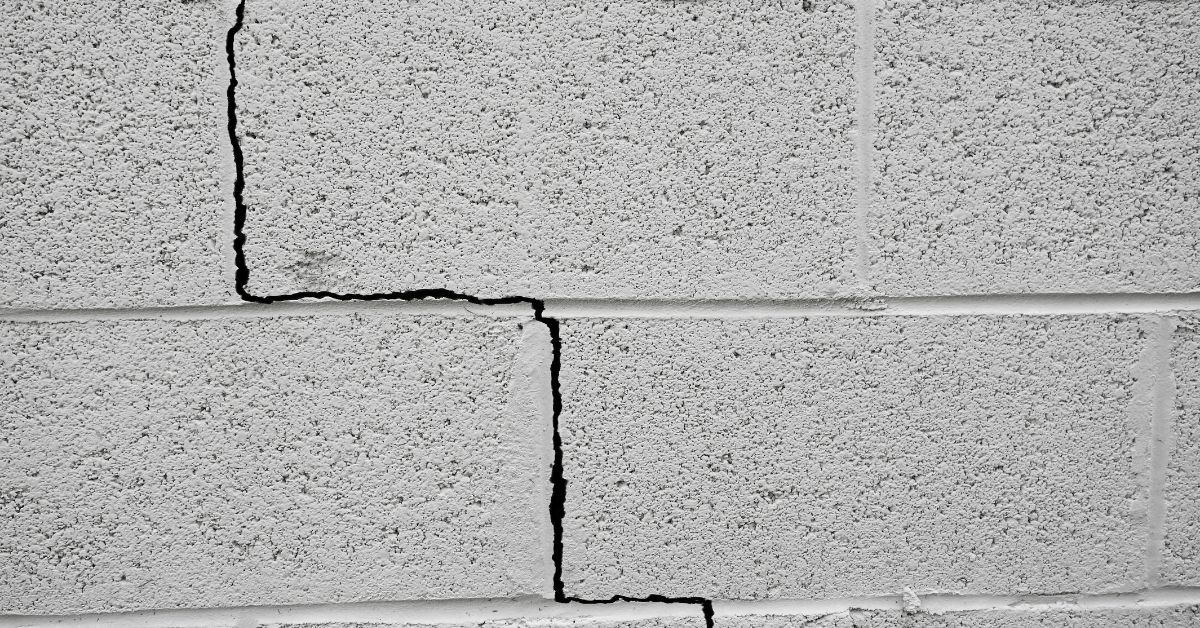
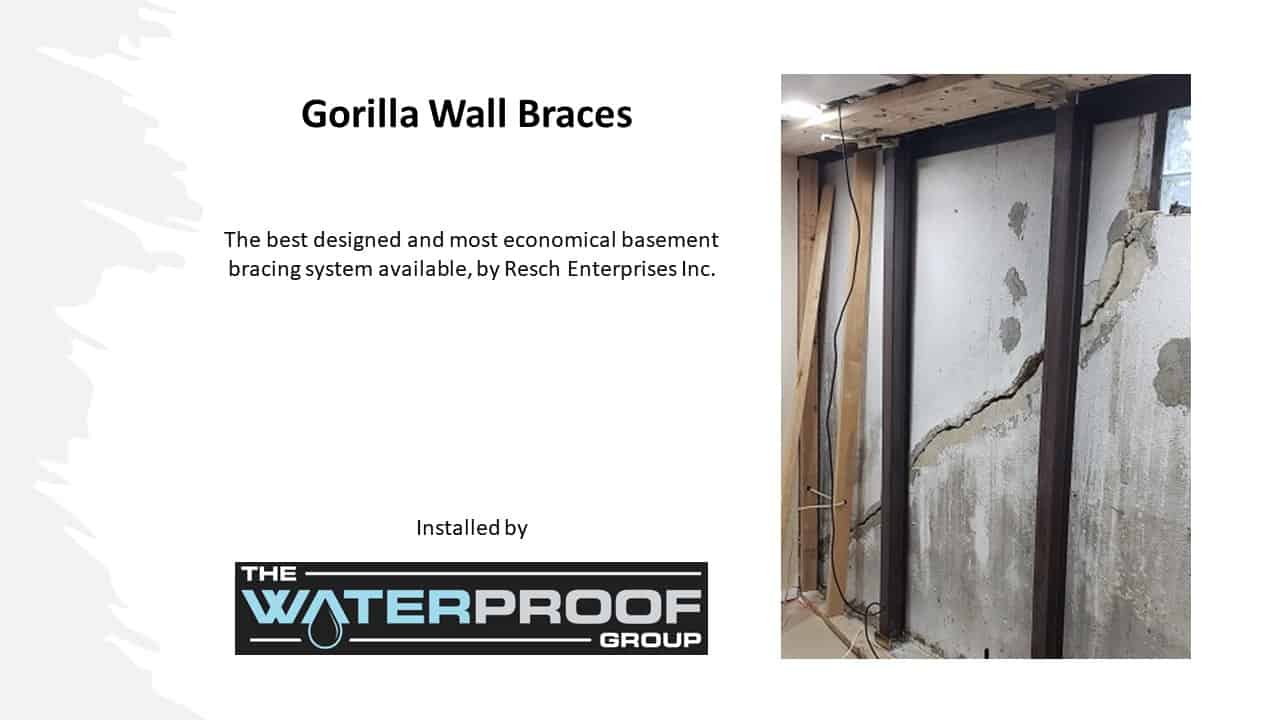
- Horizontal or stair-step cracks in block or brick foundation walls, rather than a single straight vertical line
- A wall that visibly leans or bows inward, even slightly, when you sight along it
- A horizontal crack that’s noticeably wider in the middle of the wall than at either end
- A gap opening up between the top of the foundation wall and the sill plate or floor framing above it
- Doors or windows on the main level that have started sticking or no longer close flush
- New or worsening water seepage through the wall after storms, especially tracking along a crack
If you find a crack, mark its ends with a pencil and note the date, then check back in a few weeks. A crack that’s actively lengthening or widening is telling you something different than one that’s stayed the same size for years.
Repair Options for Cracked or Bowing Foundation Walls
The right fix depends on how the wall is actually failing — an isolated crack behaves differently than an actively bowing wall, and a bowing wall behaves differently than a foundation that’s settling and dropping a corner or causing floors to sag. The Waterproof Group’s foundation repair inspection is built around figuring out which of these is happening before recommending a method.
Wall Anchor Systems
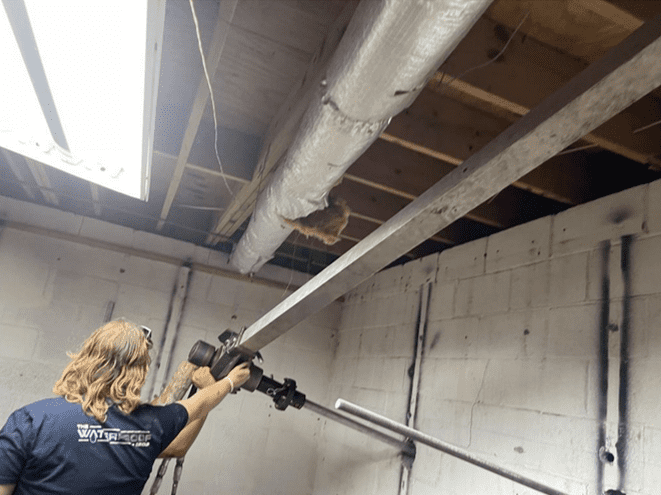
Wall anchors are typically used on a wall that’s bowing but hasn’t failed outright. An anchor plate is set out in the yard beyond the zone of pressure, connected through the wall by a steel rod to a plate on the interior face, and then tightened over time. As the anchors are tightened, they resist further inward movement and, in many cases, help gradually pull the wall back toward its original position.
Push Piers and Helical Piers
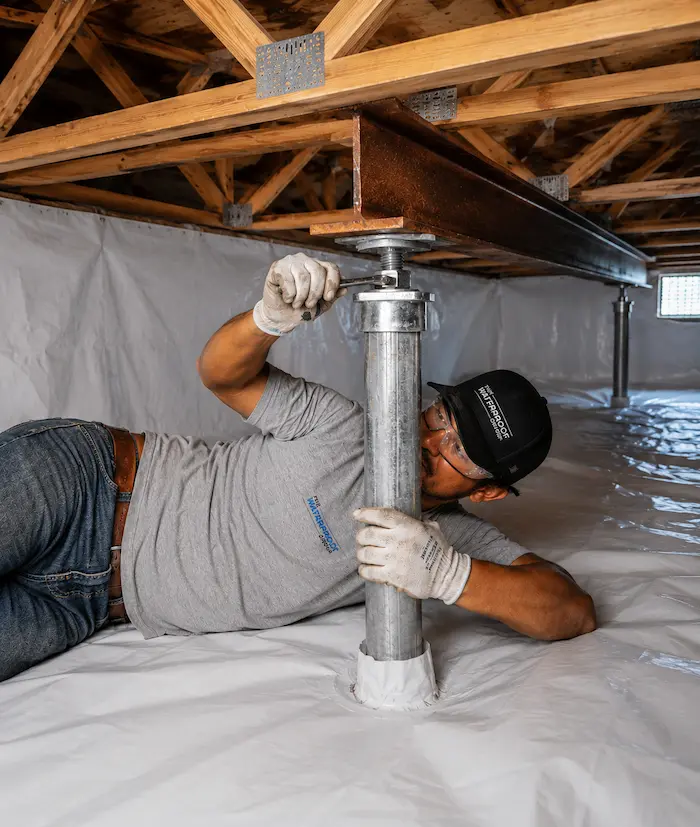
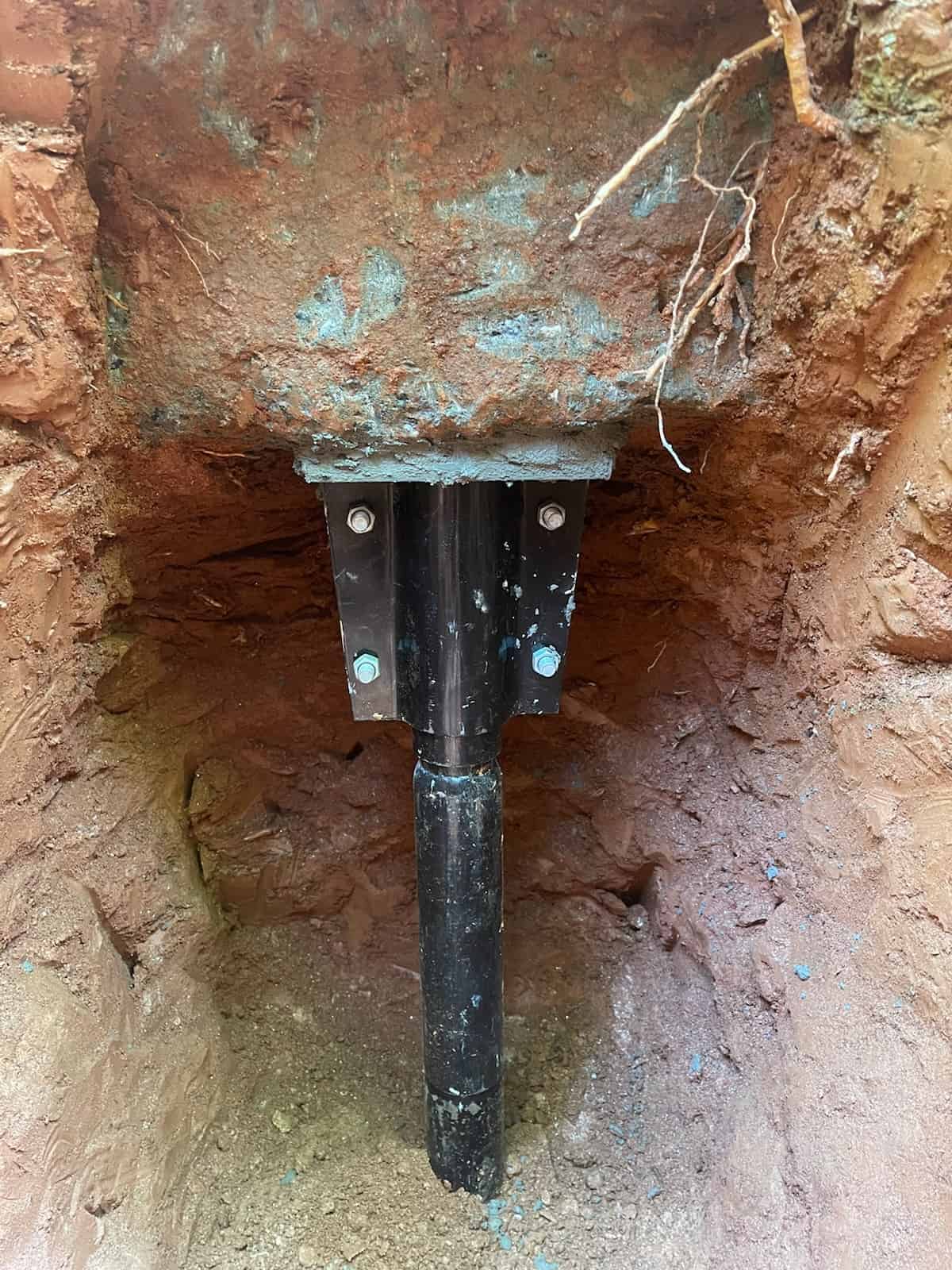
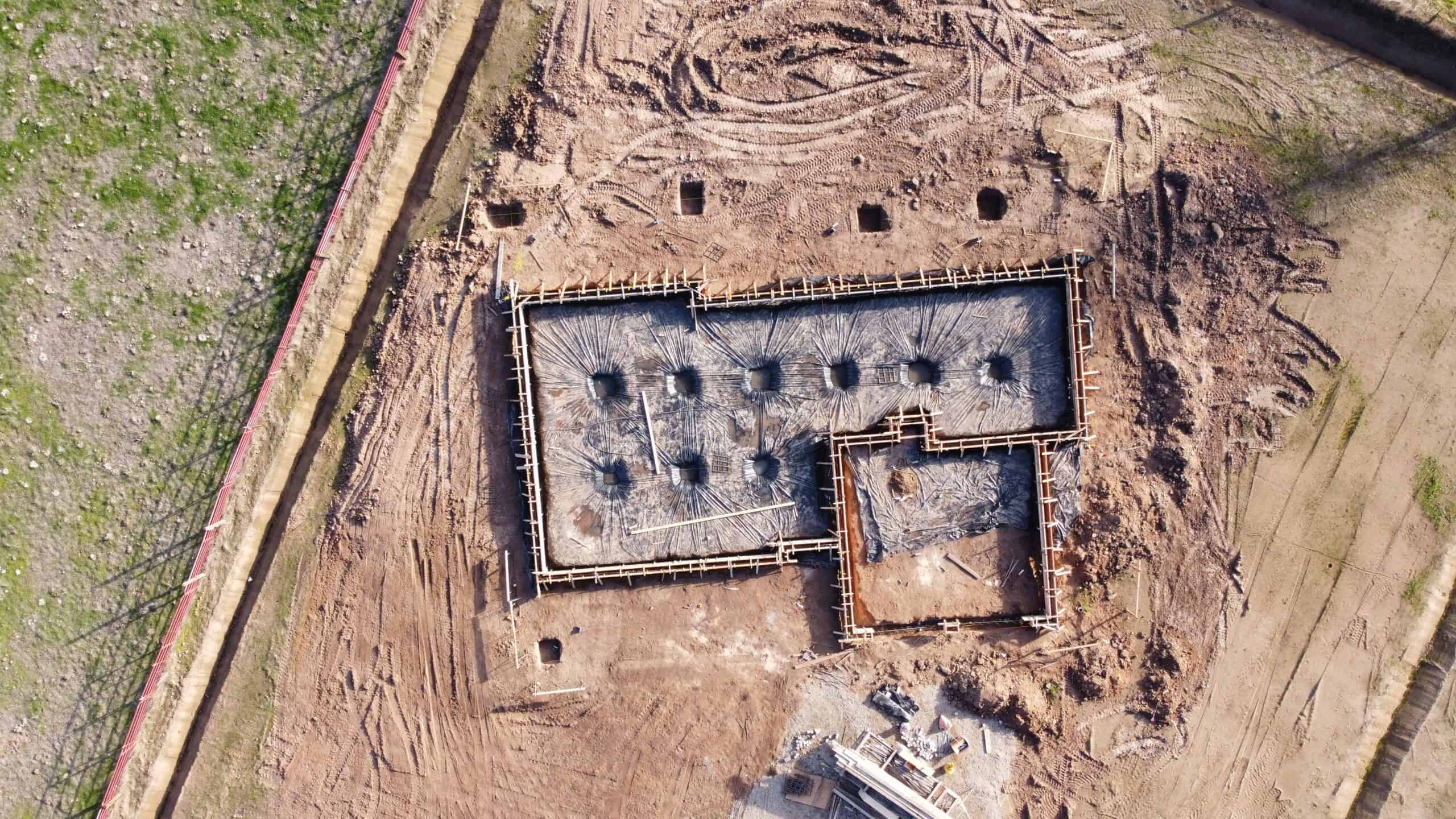
Piers come into play when part of the foundation is settling rather than just the wall bowing — a dropped corner, a sagging floor, or an uneven slab. Push piers or helical piers are driven down to load-bearing soil or bedrock, well below the unstable soil near the surface, and the structure’s weight is transferred onto them. That stabilizes the affected section and, depending on conditions, can allow for lifting the structure back toward level.
Structural Crack Repair
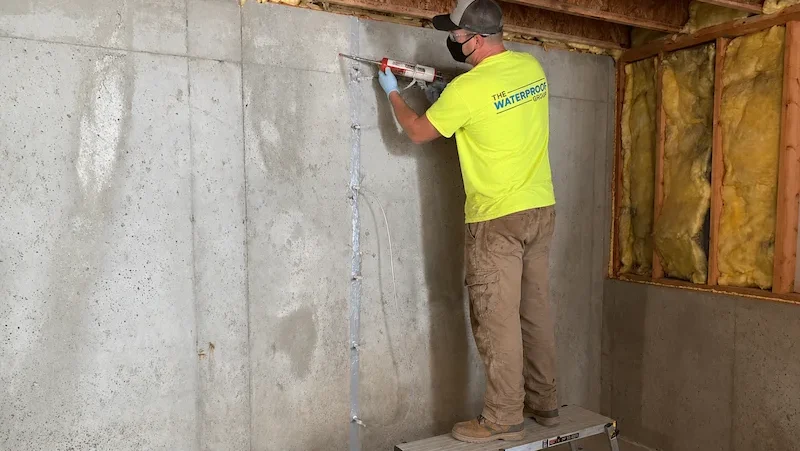
For an isolated crack that isn’t accompanied by bowing, the repair is more localized — reinforcing the crack itself and addressing the fact that a crack is very often also a water entry point. Because of that overlap, crack repair is frequently paired with basement waterproofing measures on the same wall so the structural fix and the water intrusion path are handled together, not separately.
A wall that’s bowing more than roughly an inch out of plumb has generally moved past the point where crack sealant alone will help — at that stage the wall needs mechanical stabilization, not just a surface patch.
What Not to Do When You Find a Foundation Wall Crack
- Don’t rely on hydraulic cement or exterior caulk alone as the fix. These products can slow a leak at the surface, but they don’t address the soil pressure that caused the crack, and they won’t stop a wall from continuing to bow.
- Don’t add landscaping, mulch beds, or downspout extensions that direct more water toward the foundation while you’re deciding what to do — that works against you.
- Don’t assume a small crack today will stay small. Georgia’s wet-dry soil cycle keeps applying pressure year-round, so movement tends to continue rather than resolve on its own.
- Don’t pick a repair method before a professional evaluates the wall in person. Wall anchors, piers, and crack repair solve different problems, and using the wrong one won’t stabilize the actual cause of movement.
When to Have a Foundation Wall Crack Inspected
A crack in a foundation wall isn’t automatically an emergency, but stair-step cracking, visible bowing, or a widening gap at the top of the wall are signs that the wall is under active pressure and worth having evaluated sooner rather than later. Catching it while the wall is still bowing — rather than after it’s cracked further or a floor above it starts to sag — generally means simpler, less invasive stabilization work.
The Waterproof Group inspects foundation walls throughout Metro Atlanta and can tell you whether you’re looking at a cosmetic crack, a wall that needs anchors, or a section of foundation that needs piers, along with whether waterproofing should be addressed at the same time. If you’ve noticed a crack, a leaning wall, or doors that have started sticking, it’s worth having it looked at before the next round of storms adds more pressure.