Written by Ben Adams (ben@wpgusa.org)
Foundation cracks Atlanta homeowners find aren’t automatically a sign that something is seriously wrong. Almost every home experiences some movement, and a hairline crack in a basement wall or garage slab may simply be the result of normal concrete shrinkage. But in Metro Atlanta, our red clay soils and changing moisture conditions can contribute to foundation movement — and it isn’t always obvious which cracks are cosmetic and which may be early signs of a structural problem.
The distinction matters because the two situations call for very different responses. A shrinkage crack left over from the concrete curing usually just needs to be monitored. A crack that’s widening, running diagonally or horizontally, or showing up alongside a sticking door or a sloping floor is often the foundation telling you it’s actively moving — and the earlier that gets addressed, the less invasive the fix typically is.
This article covers what actually causes foundation movement in this area, the specific warning signs worth checking for, the repair methods used to correct real structural movement, a few common mistakes homeowners make trying to handle it on their own, and what to do next if you’re not sure which category your crack falls into.
What Causes Foundation Movement in Metro Atlanta
Metro Atlanta sits within Georgia’s Piedmont region, where red, clay-rich soils are common. Some of these clay-rich soils can behave as expansive soils, swelling as moisture levels increase and shrinking as they dry. Repeated changes in soil moisture can create uneven movement beneath a foundation, contributing to settlement, foundation cracks, and wall movement over time.
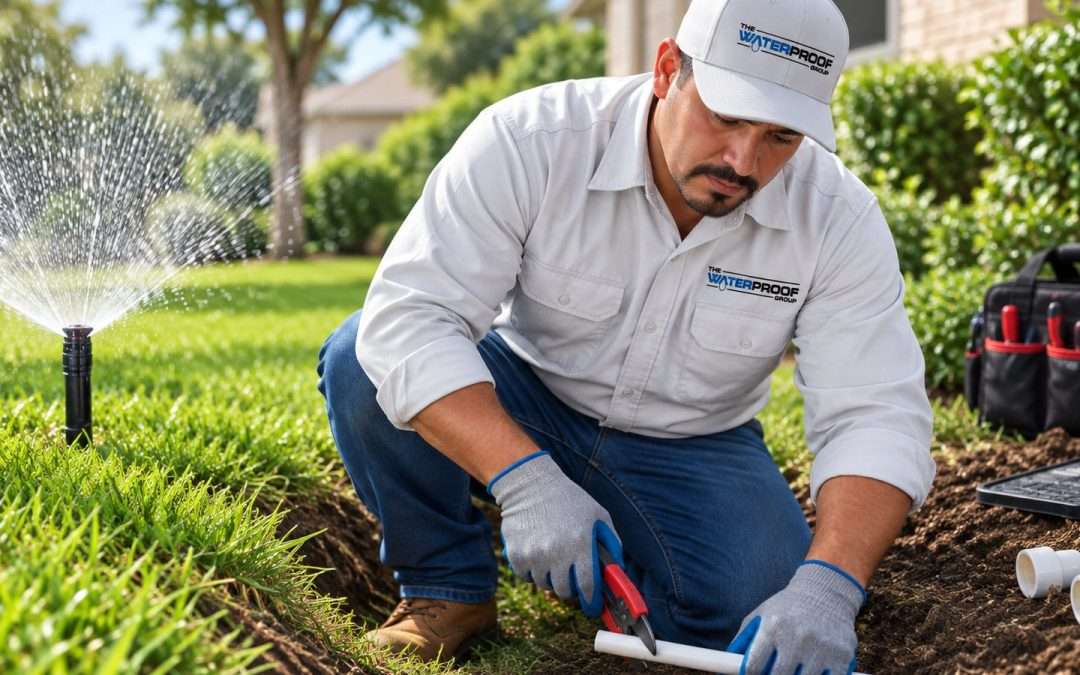
Poor grading or clogged gutters and downspouts make the problem worse by letting water pool next to the house instead of draining away, which saturates the soil right where the foundation sits. Mature trees close to the foundation, common in many older Metro Atlanta neighborhoods, can also pull moisture from the soil unevenly on one side of a home.
Which Foundation Cracks Should You Worry About?
A single hairline crack is rarely cause for alarm on its own. These signs, especially in combination, point toward active movement rather than normal settling:
- A crack wider than about 1/8 to 3/16 inch, or one that has visibly widened over weeks or months
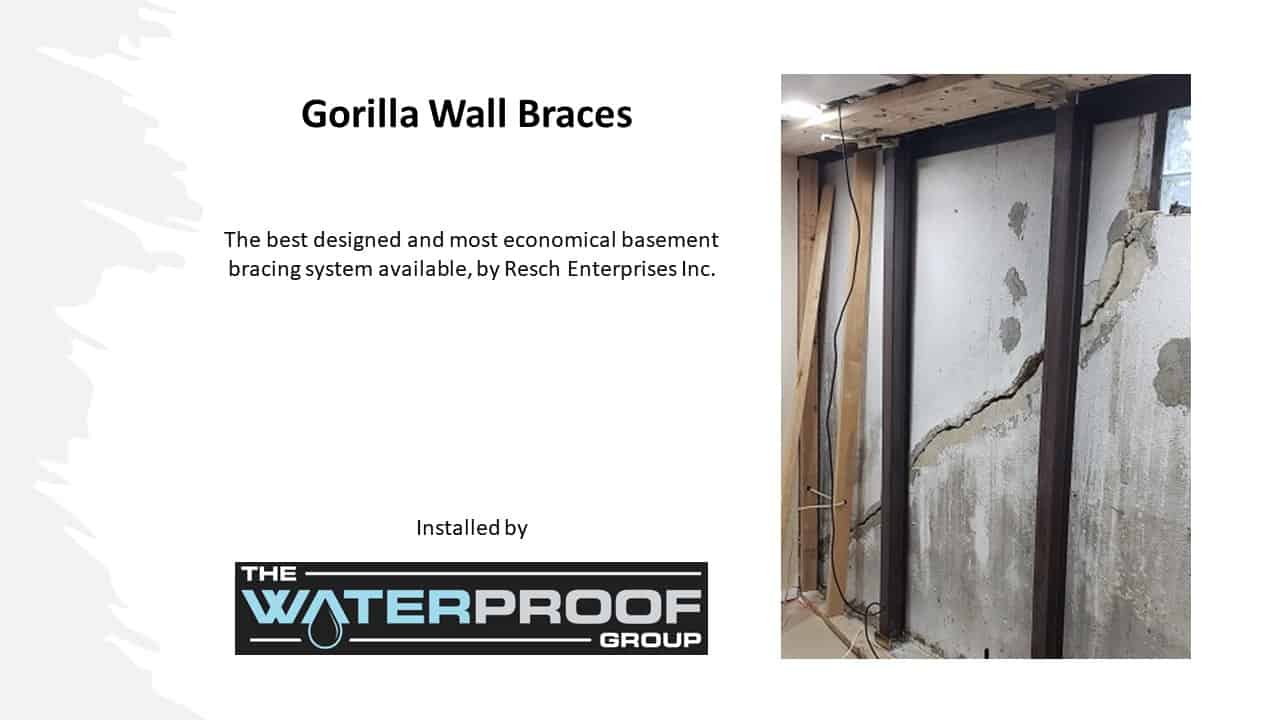
- Horizontal cracks in a basement or crawl space wall — these often indicate outward soil pressure rather than simple settling
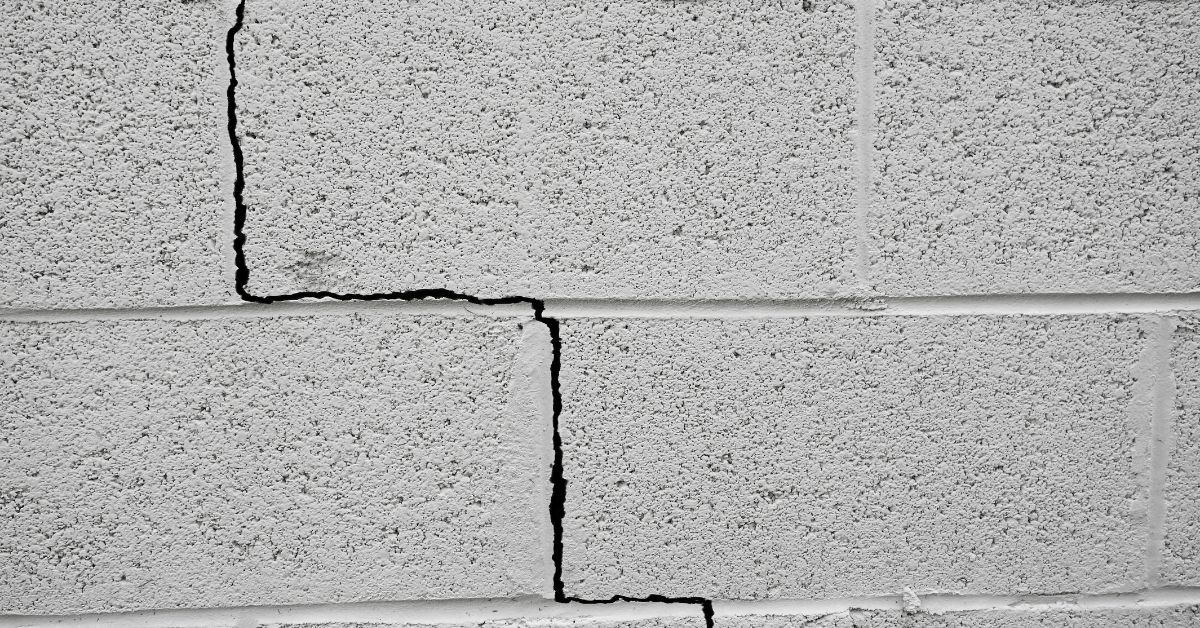
- Stair-step cracks following the mortar joints in a block or brick foundation wall
- A wall that looks like it’s bowing, leaning inward, or bulging compared to a straight edge
- Doors or windows that have started sticking or no longer close and latch properly
- Sloped or springy floors that can be felt underfoot
- Gaps opening up between a wall and the ceiling, floor, or a door or window frame
- A crack that reappears not long after being patched
One of these alone doesn’t necessarily mean a structural problem. Two or three showing up together is a much stronger signal that the foundation is actively moving and worth having evaluated.
Foundation Repair Options
The right repair depends entirely on what’s actually causing the crack. These are the methods used to address genuine structural movement, as opposed to cosmetic patching:
Wall Anchors and Bracing for Bowing Walls
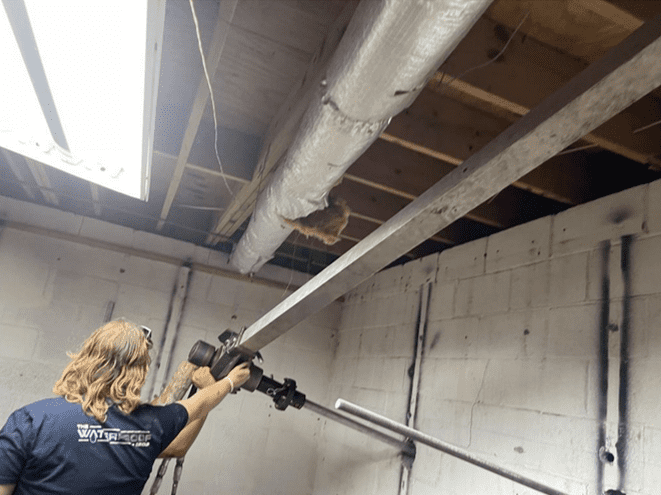
When a basement or crawl space wall is bowing or leaning inward from soil pressure, wall anchors or carbon fiber and steel bracing straps are installed to stabilize the wall and, in many cases, allow it to be straightened gradually over time — without tearing out and replacing the entire wall.
Push Piers and Helical Piers for Settlement
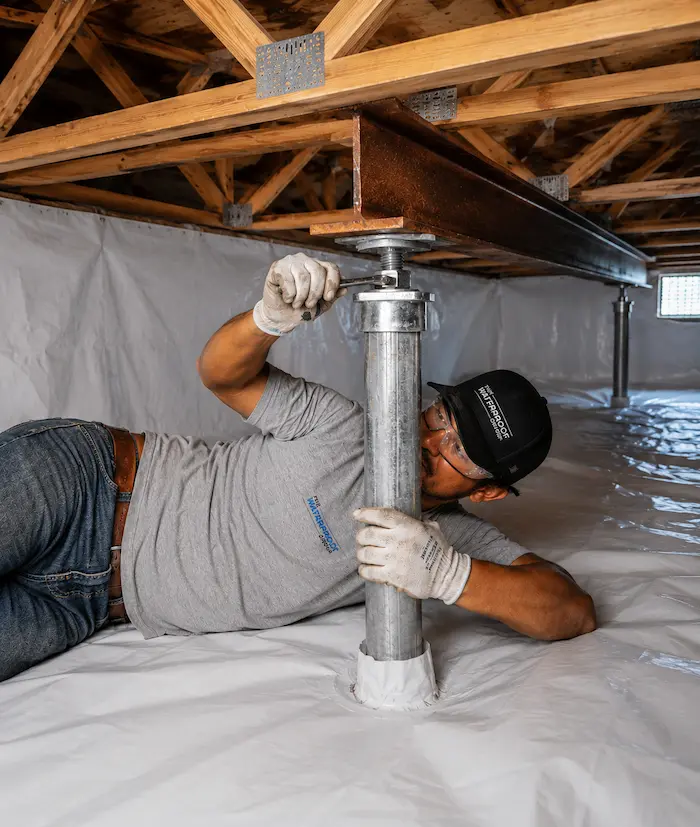
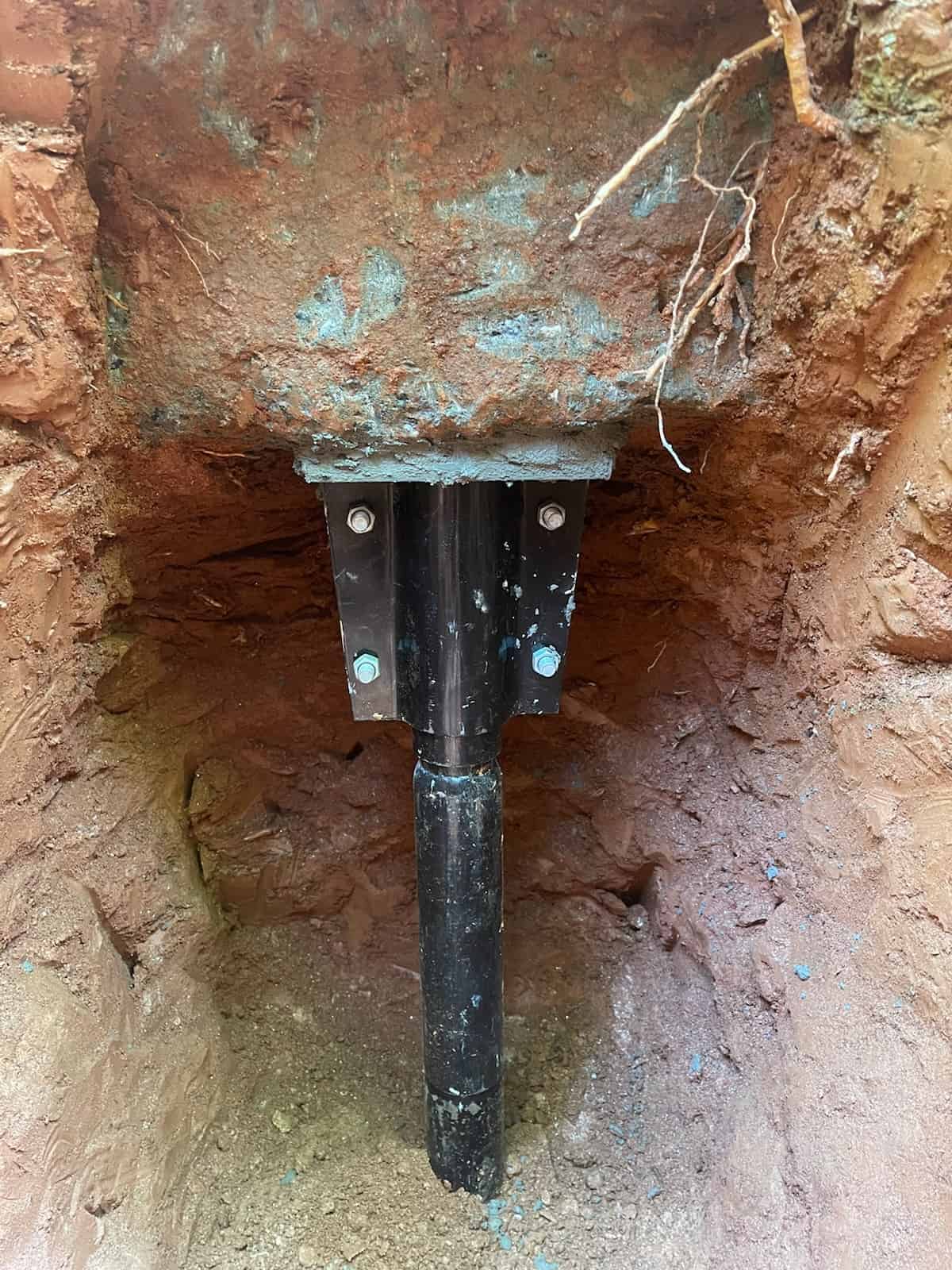
When a section of a foundation has settled unevenly — visible as sloping floors, cracked drywall, or a stair-step crack that keeps growing — piers are driven down to load-bearing soil or bedrock to support that section and, where possible, help lift it back toward its original position.
Crack Injection and Exterior Waterproofing
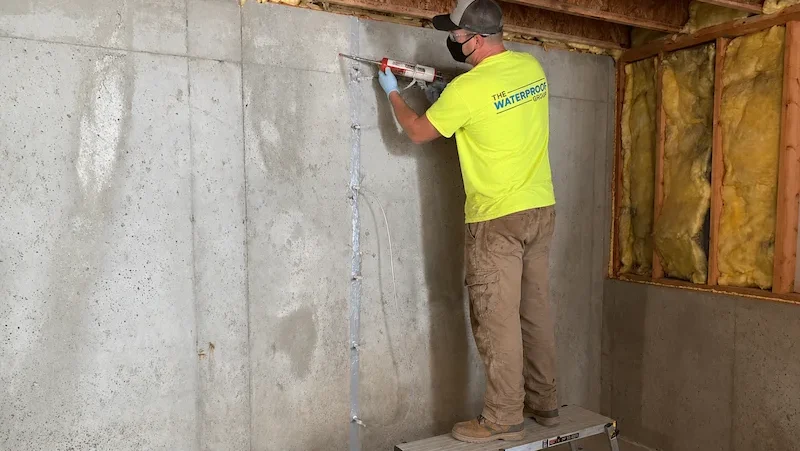
A non-structural crack that’s allowing water intrusion can often be sealed using an interior crack injection system. Depending on the crack conditions and repair objective, polyurethane or structural epoxy may be used. When exterior drainage or waterproofing deficiencies are contributing to the problem, correcting those conditions can help reduce the water pressure reaching the foundation wall.
What Not to Do When You Notice a Crack
- Don’t assume a caulk-and-paint patch has “fixed” a structural crack — it hides the crack visually but does nothing about the soil movement or water pressure causing it.
- Don’t wait to see if it gets worse once you’ve already spotted a horizontal crack, active bowing, or doors that have started sticking — those symptoms typically progress rather than resolve on their own.
- Don’t assume a sump pump or interior drain alone solves a problem that’s actually structural — it can manage water, but it won’t stabilize a moving wall.
- Don’t try to diagnose the cause from a photo or a quick look online — a harmless hairline crack and an early structural one can look similar to an untrained eye, and the correct repair depends on getting that distinction right.
Get the Crack Evaluated
Most foundation cracks fall into one of two categories: normal shrinkage that just needs to be watched, or a sign of active soil movement that’s worth correcting before it affects doors, floors, or the rest of the structure. The warning signs above — width, direction, and what else is happening around the house — are a reasonable first check, but the only way to know for certain is a hands-on look at the crack itself.
The Waterproof Group’s foundation repair services cover everything from wall anchors and piering to crack injection paired with exterior waterproofing, so the fix addresses the cause rather than just the symptom.
Schedule a Free Foundation Inspection
Not sure what the crack in your foundation means? The Waterproof Group provides foundation evaluations throughout Metro Atlanta. We’ll take a hands-on look at the crack, surrounding structure, drainage conditions, and other warning signs to help determine whether you’re dealing with normal shrinkage, water intrusion, or active foundation movement.
Schedule your FREE inspection or give us a call (678) 223-4948